
How to Reduce Energy Costs in Your Commercial Kitchen
Energy is one of the largest recurring costs in any commercial kitchen — and one of the most controllable. Most kitchens waste a surprising amount of power and gas through inefficient equipment, poor maintenance and careless habits. The good news: a handful of smart changes can noticeably cut your bills every month without affecting output or quality.
Where the energy goes
In most kitchens, refrigeration, cooking and ventilation account for the bulk of energy use. Refrigeration runs 24/7, cooking equipment draws heavy power during service, and exhaust systems run for hours. Understanding where your energy goes tells you where the biggest savings are hiding.
1. Choose energy-efficient equipment
Your biggest savings start at the point of purchase. Star-rated refrigeration, induction cooking and well-insulated ovens use far less power than older or cheaper alternatives. Induction, in particular, transfers most of its heat directly to the pan — saving energy and keeping your kitchen cooler. When you next replace equipment, treat efficiency as a core buying criterion, not an afterthought. Our equipment buying guide covers this in detail.
2. Maintain equipment regularly
Dirty condenser coils, worn door gaskets and uncalibrated thermostats all force equipment to work harder and burn more energy to do the same job. Regular cleaning and a scheduled AMC keep everything running at peak efficiency — often paying for itself in energy savings alone. A simple coil cleaning can noticeably cut a refrigerator's power draw.
3. Build smart operating habits
The biggest free savings come from how your team uses equipment day to day:
- Switch on equipment only when needed — avoid long idle pre-heating.
- Keep refrigerator and freezer doors shut; check seals regularly.
- Run dishwashers and ovens only with full loads.
- Stagger start-up so you don't spike your power demand all at once.
- Service exhaust and ventilation so it runs efficiently, not against resistance.
4. Optimise refrigeration
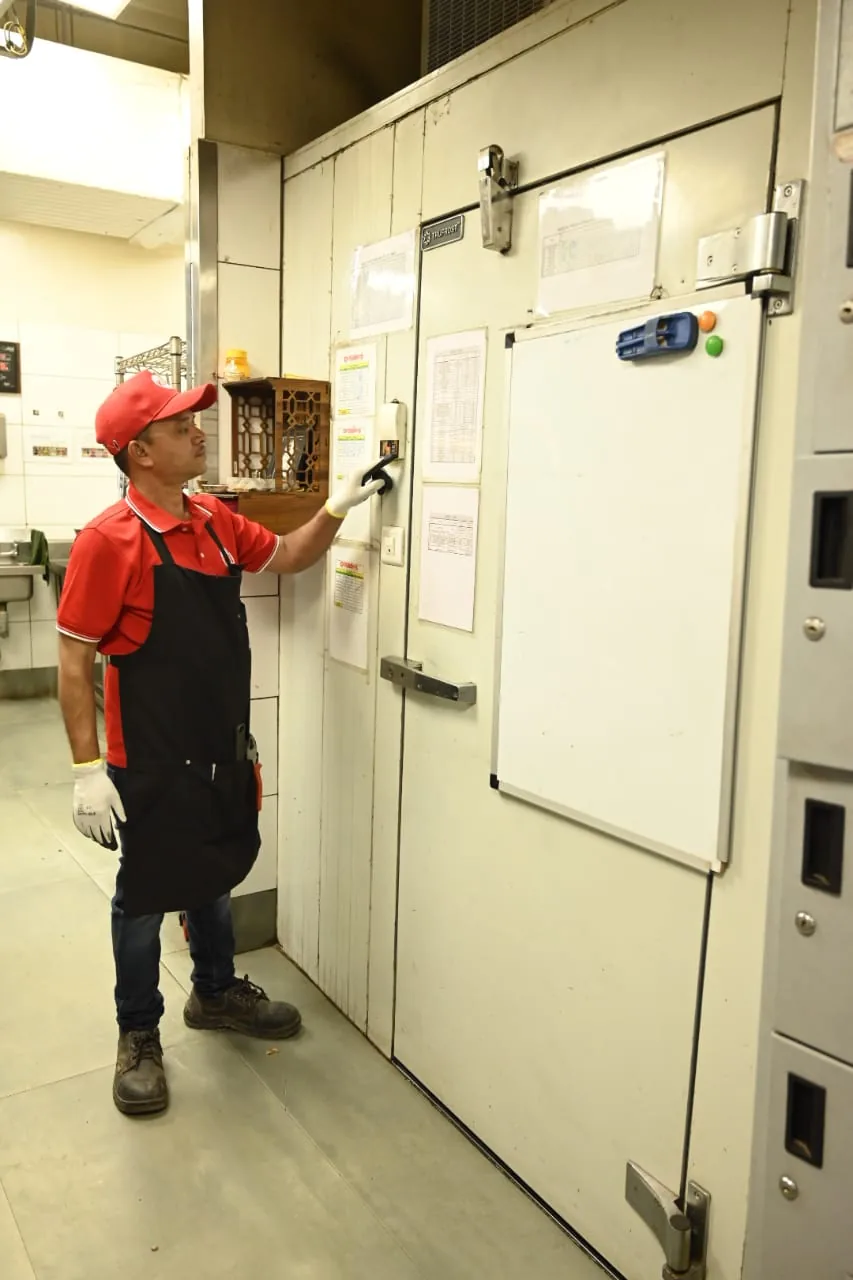
Refrigeration runs around the clock, so small improvements add up fast. Keep units away from heat sources like ovens, don't overload them (air needs to circulate), clean the coils regularly, and make sure cold rooms seal properly. A well-maintained cold chain also protects your stock — a double win for cost and food safety.
5. Improve ventilation efficiency
Exhaust and ventilation can be major energy users. Clean filters and ducts so fans don't strain, and make sure your system is sized correctly — an over- or under-sized system wastes energy. Good MEP design from the start makes a lasting difference here.
6. Track and review your bills
You can't manage what you don't measure. Review your electricity and gas bills monthly, watch for unexplained spikes, and investigate them quickly — a sudden jump often signals a failing appliance or a door seal gone bad. Treating energy as a managed cost, not a fixed one, is how the best operators keep margins healthy.
Frequently asked questions
What's the fastest way to cut energy costs? Start with the free stuff — operating habits and basic maintenance — then upgrade to efficient equipment as you replace older units.
Is induction really worth it? For many kitchens, yes. It's more efficient, cooler and often safer, though the best choice depends on your menu and cooking style.
Final word
Efficient equipment, consistent maintenance and smart habits are the three levers that reliably cut energy costs — with no impact on the food you serve. Start with the free habits, fix maintenance gaps, and upgrade to efficient equipment as you replace older units. KNI helps you source efficient equipment and keep it serviced year-round — get in touch to lower your running costs.
Need help with your commercial kitchen?
Talk to the KNI team about equipment, AMC, layout design or manpower.
Get in Touch